Guest Post by Edward McSweegan –
It’s an interesting phrase: historical fiction. History is a collection of facts, dates, places, and well-known people. It’s something you’re supposed to know before leaving high school. Fiction on the other hand is the “made up.” The unreal. The untrue. You would think putting the two—history and fiction—together would annihilate both as efficiently as matter and antimatter coming into contact. The trick in writing historical fiction is not dissimilar to that of physics: establish a controlled blending of the two to provide entertainment and enlightenment without causing a literary explosion.
One of the masters of the history-fiction blend is Wilbur Smith, who wrote, “I go to a great deal of care and trouble to get the historical background correct but having done that I am not averse to altering it slightly to fit my storyline. What I’m trying to say is that it’s historically researched, but then history is bent to accommodate the stories that I want to tell.”
On the other hand, Patrick O’Brian wrote, “…perhaps the ordinary writer should not take many liberties with the past. If he does, he sacrifices both authenticity and the willing suspension of disbelief, and he is sure to receive letters from those with a greater love of precision than himself.”
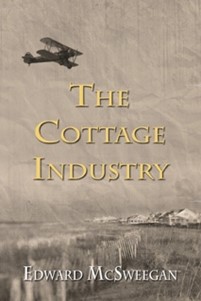
All good, if somewhat contradictory advice. I like Smith’s approach and I suspect most writers try to follow his slight altering of history for the sake of the story. In writing about America’s only female astronomer, Maria Mitchell, and the 1878 solar eclipse (Shadow of the Moon), I greatly exaggerated the difficulties some in her party had traveling from Pueblo to Denver in time for the three-minute eclipse. But I did not alter the history of Mitchell’s arrival in Pueblo and Denver or the facts of the eclipse itself and its impact on those who observed it. Similarly, in writing about how a small real estate company effectively closed off the Connecticut shoreline to all but a few lucky homeowners in the 1920s (The Cottage Industry), I largely stuck to the dates and facts of those events. I did change the year of the opening of the Lyme Auto Service and the likely availability of a Leica camera in 1922. I had no idea when Beach Day occurred at Sound View Beach in the summer of 1922, so I guessed. (It must have been a Saturday.) These minor bits of Wilbur Smith history-bending were intended to move the characters and the story along a certain arc, and not to disfigure or dishonor the actual events.
Writing about Cuba and the end of epidemic yellow fever during the last days of the 19th century (The Fever Hut), I had the sense Patrick O’Brian may have been looking over my shoulder, watching for any liberties I might take with the past. He need not have worried. The war in Cuba, the American occupation, and the conquest of yellow fever are so well documented—sometimes to the hour—that it’s nearly impossible to stray from the historical timeline without wandering into the realm of alternative history. So, I stuck to the facts and to the timeline, relying on large amounts of historical and scientific research to flesh out an already fixed storyline and give my characters a more complete world in which to act out their goals. That level of detail—from 1890s slang to clothing to medical diagnostics—helped preserve O’Brian’s quest for authenticity and belief in the story.
Of course, not all of my historical and scientific research went into the book (The Fever Hut). I tried, like many other writers, to use all of it in the manuscript because I’d spent so much time collecting it and thought readers might find it as fascinating as I did. But rebellious beta-readers and common-sense editing reduced the final draft from a data-filled textbook to readable historical fiction.
And what happened to all that esoteric but unused research material? It didn’t go to waste, collecting dust in some old drawer or attic. Much of the material was used to write almost a dozen different essays on medicine and history, which then were published in a medical humanities journal or on the New England Historical Society website. That’s the nice thing about research material for a book: it may find life in the current manuscript or some unexpected essay, commentary, or even a short story. So, don’t throw it out. Think about how to use it.
Edward McSweegan is a writer in Rhode Island. His debut novel, Shadow of the Moon was published in 2023. Two other historical novels, The Fever Hut and The Cottage Industry will be published in 2024.